
Fiona Lideza Went From Call Center Agent to COO
From frontline calls to executive leadership, Fiona Lideza’s career raises useful questions about how employers recognise capability and develop talent.

Fiona Lideza’s rise from call center agent to COO shows how frontline experience, sales capability and continued development can shape a leadership career in BPO. Her path, from earning $300 a month at 18 to becoming a business executive at 21, offers Australian employers a case study in looking beyond age and nationality when assessing potential.
Source: Fiona Lideza Went From Call Center Agent to COO
Fiona Lideza: Selling BPO one call at a time

Fiona Lideza studied Mass Communication at the University of San Jose-Recoletos in Cebu, then moved into business development. She has described the start of that work as practical and hands-on: making cold calls, booking demonstrations and learning how to sell BPO services through individual conversations. That early exposure to client discussions became a foundation for her later work in sales leadership and company operations.
“Frontline experience can be a starting point for leadership, not a limit on it.”
Her LinkedIn profile records two years as Director of Sales and Marketing at an outsourcing firm in Cebu before she joined STAFFVIRTUAL as Sales Director in April 2018. STAFFVIRTUAL is described in the source profile as an American-owned outsourcing company with offices across the Philippines. In November that year, its CEO, Ike Stranathan, praised her ability to take on difficult assignments. He also wrote that she had closed $4M USD in business at 23.
She became Chief Operating Officer in March 2020. Her profile credits her with helping generate value through streamlined processes and social media marketing, while the company’s leadership page describes her contribution to outsourcing, KPO and PEO/EOR models. The same page says she has more than nine years of executive leadership in outsourcing. These details trace a progression from direct sales work to a role spanning broader operating and business-development concerns.
For employers, the point is not that every frontline employee should follow the same route. It is that experience close to customers can reveal strengths that a résumé alone may not show. Australian businesses considering internal development can also look at Beryl Fauni’s progression from collections agent to COO for another example of a career growing from frontline work into executive leadership.
Too young, until she wasn’t
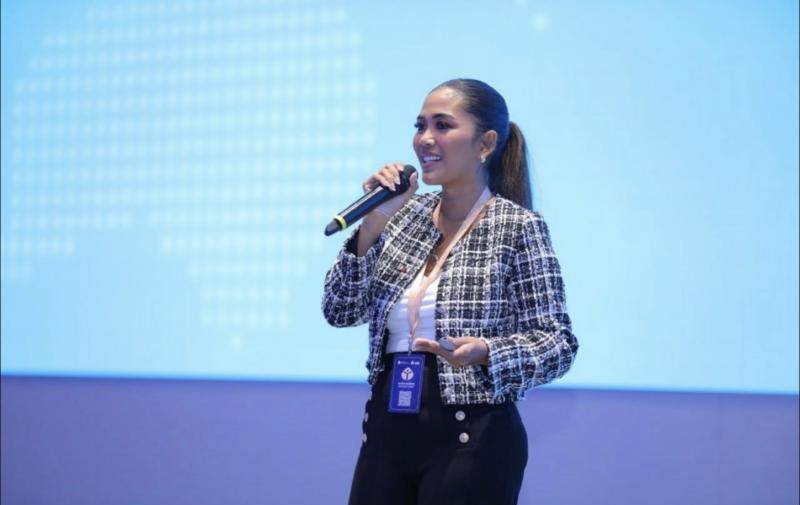
In May 2024, Fiona Lideza shared lessons from becoming an executive at a young age. One came from being told she was too young when she asked a manager for a promotion. Rather than accept that judgement as a permanent limit, she said she decided to prove the assessment wrong. Her experience highlights a familiar hiring challenge: age and tenure can become shortcuts for judging readiness, even when they do not tell the whole story.
“Maturity and business savvy do not necessarily equate to tenure.” That observation does not mean experience is irrelevant. It asks employers to distinguish time served from demonstrated judgement, learning and delivery. A candidate’s ability to explain decisions, respond to setbacks and take responsibility may provide more useful evidence of leadership potential than age alone.
For HR and project teams, that distinction can shape how promotion and succession decisions are made. Instead of relying only on years in a role, define what the next level requires and look for examples of those capabilities in practice. That may include handling a difficult customer conversation, coordinating work across colleagues or learning a new responsibility. Consistent criteria can help decision-makers test readiness fairly while still recognising where support or further development is needed.
Fiona Lideza’s story also illustrates why managers should keep promotion conversations open. When an employee is not yet ready, clear feedback about the capability gap gives them a route to develop. When they are ready, assumptions about age should not obscure the evidence.
Paying for value, not just price
Another lesson Fiona Lideza has shared is that choosing the lowest-cost option can create a more expensive problem if the work is poorly done or delayed. “Saving money can often be a costly mistake.” Her argument is about measuring the contribution a person or service makes, rather than judging its value solely by its price tag.
For employers building a team or evaluating an outsourced function, that means making the expected outcome clear before comparing costs. Consider the work to be delivered, the skills needed, the level of responsibility and the impact of a missed deadline or inconsistent service. A price comparison without this context may not show whether an option can meet the business requirement.
This is not a reason to dismiss budgets. Cost still matters, but it is most useful when considered alongside capability, quality and the support needed for people to do the work well. An employer can make a more grounded decision by documenting the role, assessing relevant experience and agreeing how performance will be reviewed. For practical context on shaping a hiring brief and managing a team in the Philippines, see GWS’s guide to hiring and managing Filipino talent.
Lideza’s perspective is especially relevant when a role requires sound judgement as well as task completion. The cheapest option may not be the best fit if the work calls for initiative, reliable communication or specialised knowledge. Equally, a higher price is not proof of better performance: employers need to identify the outcomes that matter and assess candidates or providers against them.
“Maturity and business savvy do not necessarily equate to tenure.”Fiona Lideza · Chief Operating Officer, STAFFVIRTUAL
Capability over nationality
At the Global Business Forum in Uzbekistan in July 2024, Fiona Lideza spoke about STAFFVIRTUAL’s decision to establish an outsourcing location there. As reported by IT Park Uzbekistan, she pointed to a combination of considerations: cost savings, talent, infrastructure and strategic location. Her wider message about the company’s purpose is to create opportunities across borders while placing capability ahead of nationality.
That view offers a useful lens for Australian workforce planning. Where a role is based is one consideration; what the person can contribute is another. Employers can start with the requirements of the work, then assess whether candidates have the relevant skills, communication ability and readiness to collaborate with the wider team. This keeps the discussion connected to business needs rather than assumptions about where talent comes from.
Lideza has also spoken about inclusion in technology. As a young woman executive in the sector, she welcomed signs of greater inclusion for female talent and said she hoped her experience would encourage young women to explore and thrive in technology and business. For employers, representation is not just a statement of intent: it can be reflected in who gets considered for stretch assignments, who is heard in decision-making and whether progression criteria are clear.
A capability-led approach still requires careful assessment. Set out the responsibilities and standards of the role, use relevant and consistent selection criteria, and give candidates a fair chance to show how they would meet them. GWS’s overview of hiring and outsourcing in the Philippines can help employers consider the wider workforce context without replacing role-specific assessment.
Where she says it is going
Fiona Lideza’s work has not moved away from sales. She has said that she continues to sell BPO services while also training and mentoring the next generation of business development associates in the Philippines. That combination connects her earlier experience on calls and in sales with her present responsibility for helping others build their own capability.
The source profile describes this as a developing leadership role: her growth is tied to STAFFVIRTUAL’s next stage, including expansion into Uzbekistan and other global markets. Lideza has said she expects that growth to bring further lessons. In 2025, she recorded the first episode of the STAFFVIRTUAL podcast, Beyond Virtual, discussing leadership, growth and lessons from her career. In 2026, she began sharing videos about how experience as both an employee and an employer informs the way she leads a team for clients.
For organisations, this part of her story brings the focus back to development. Mentoring is one way experienced staff can pass on practical knowledge, but it works best when the organisation makes room for people to practise, receive feedback and take on appropriate responsibility. The example also shows how leadership can remain connected to the work: Lideza continues to sell while supporting the development of others.
Her career is not a guarantee that a particular development approach will produce the same outcome elsewhere. It is a specific example of someone moving from frontline work into business development and operations, then using that experience to train others. Employers can take the principle seriously without copying the path: identify people with potential, make opportunities to demonstrate it visible, and connect development to real business needs.
What Australian employers can take from her path
Lideza’s story offers a practical prompt for employers reviewing how they recognise talent. Frontline roles can provide valuable exposure to customers, processes and the everyday demands of service delivery. If managers notice emerging strengths and give people a chance to develop, that experience may become relevant to future leadership roles. The lesson is to assess what a person can do and what they can learn, rather than relying on age, nationality or tenure as stand-ins for capability.
For a workforce decision-maker, the first step is to define the business outcome behind a role or development opportunity. Then identify the capabilities needed, consider how candidates can demonstrate them and agree how success will be reviewed. When the need involves recruiting or building a team in the Philippines, a clear brief helps connect the required work with the skills sought. It also gives HR, project leads and hiring managers a shared basis for discussing quality, cost and performance.
Finally, consider whether the role offers a path for people to contribute more over time. Development does not require an immediate promotion; it can begin with a defined responsibility, practical feedback or an opportunity to support colleagues. Lideza’s move from sales work into executive leadership, and her continued focus on mentoring, makes the value of that progression visible without suggesting there is only one route to leadership.
If your team is assessing a recruitment need or planning a workforce in the Philippines, prepare a short brief covering the work, skills and outcomes required, then contact Global Workforce Solutions to discuss the requirement.
Source: this story is adapted from BPOAI.ai’s feature on Fiona Lideza, which draws on Fiona Lideza’s public LinkedIn posts and profile and the STAFFVIRTUAL leadership page.