
From Collections Agent to COO
Beryl Fauni moved from collections work to COO at Vault Outsourcing. Her story offers employers a grounded lens on frontline experience and team development.

Beryl Fauni’s path from collections agent to COO at Vault Outsourcing shows how frontline experience can form part of a long-term leadership journey. She joined the company in 2016 to work in collections and, ten years later, was helping lead its operations. Her story also offers Australian employers a way to think about developing people within offshore teams.
Source: From Collections Agent to COO
What the collections agent role taught her
Collections is demanding work. Each conversation is with someone who is behind on a payment, and many people would rather not answer the call. Fauni began in that environment, joining Vault Outsourcing in 2016 with the hope of doing good work and helping where she could. She did not begin with an expectation that the role would lead to the executive team.
“Frontline experience can make a leader’s operational perspective easier to understand.”
Vault presents collections as a specialist function rather than a volume exercise. The company says it looks for emotional intelligence and judgement under pressure, and argues that relying on a script alone can turn a difficult conversation into a standoff. For Fauni, working directly with customers meant learning the realities of the role before moving into broader responsibilities.
When Vault marked her ten years with the company in March 2026, it used her experience to explain its approach to building teams. Rather than hiring individual high performers and assuming a strong group will follow, the company says it aims to develop people from within. It described Fauni as someone who took a chance on its vision while the business was still young. Vault was founded in 2015.
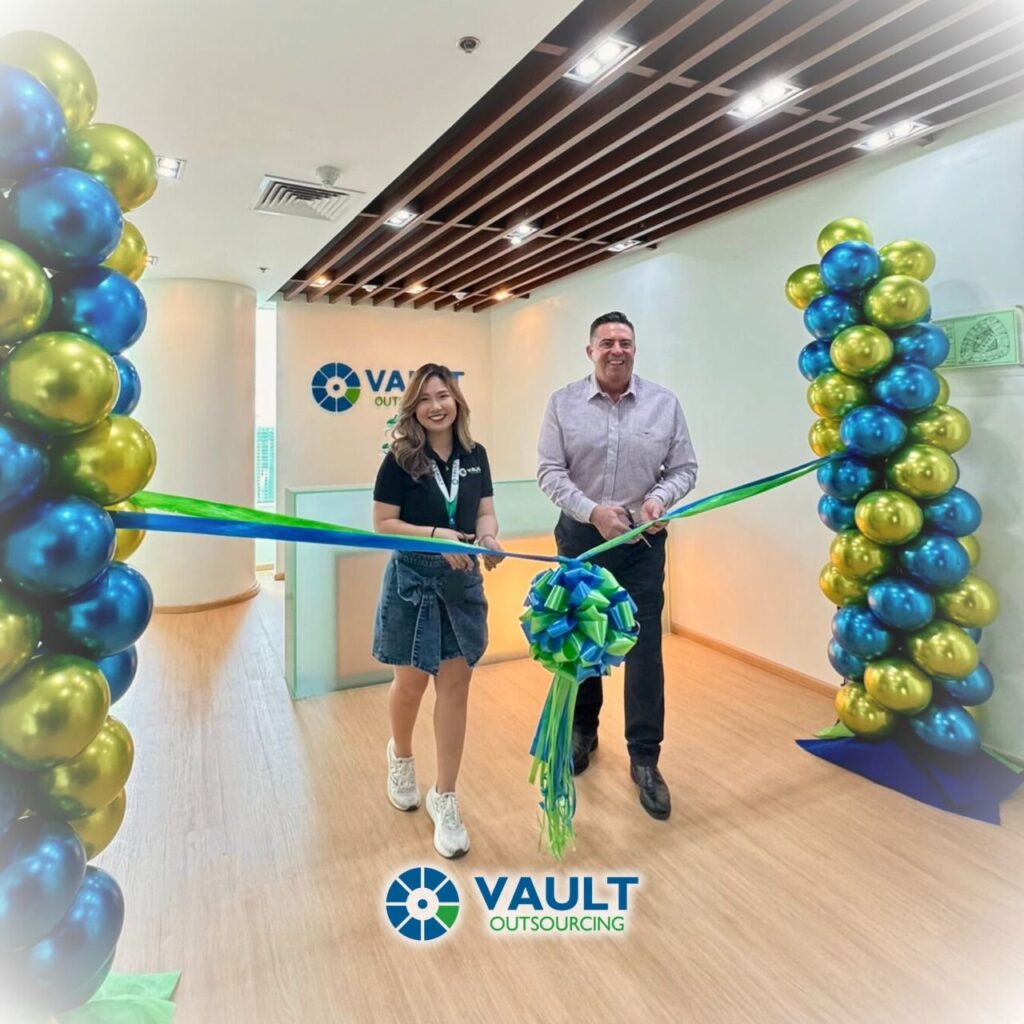
Her progress took her through operations and sales. Vault’s posts show her working as Director of Sales Operations before the company announced her promotion to Chief Operating Officer. In the earlier role, she joined CEO Dean Hutton to open a newer office at Insular Life Corporate Centre in Muntinlupa, in the south of Metro Manila. Vault described the anniversary as “A story about a woman of grit.”
For employers, this is a specific career story, not proof that every frontline employee will follow the same route. Its useful detail is the sequence: a demanding customer-facing role, experience across operational and sales responsibilities, and later executive leadership. When hiring for an offshore function, it can be worth asking how the provider identifies potential and supports people as they take on more responsibility.
How she leads

Fauni credits the people around her for backing her early and growing alongside her. Her account of leadership centres less on position than on what a leader makes possible for others: sharing experience, creating room to learn and helping colleagues recognise their own potential. She has said that one of the most rewarding parts of her role is seeing her team do well.
That perspective connects her own progression with Vault’s stated preference for developing its people. It also gives an employer a more useful conversation than simply asking who holds a senior title. A buyer can ask how leaders coach team members, pass on operational knowledge and give people opportunities to build capability. Those questions help clarify what development means in practice, while leaving room to assess the provider’s actual arrangements rather than assume them.
Fauni has also expressed gratitude for working at a company that invests in developing its own people. For a prospective client, that is her account of the workplace, not an independent measure of training or promotion outcomes. It can still prompt a practical discussion: what learning is available to the team, how is feedback shared, and how are employees supported when a role expands?
Companies considering offshore recruitment can use the same questions when defining their own workforce requirements. GWS’s guide to hiring Filipinos provides further context for employers planning recruitment and remote-team management. The central point is to make the capability and development expectations clear, rather than treating leadership succession as an automatic outcome of hiring.
Why her path matters to buyers
For an Australian lender weighing an offshore team, a senior leader who has done the frontline work offers a relevant perspective on the function. Collections, compliance and customer conversations are among the services Vault offers, and Fauni learned collections on the floor before moving into management. Her path connects the work a client may be looking to place with the experience of one of the people helping lead the company.
That connection is a useful starting point for due diligence, not a substitute for it. A leadership biography cannot, by itself, establish how a particular account will be staffed, how performance will be reviewed or how customer interactions will be managed. Buyers should explore those details directly, including the responsibilities of the proposed leadership team and how their experience relates to the scope of the work.
Employers can also distinguish between a provider’s stated approach and the evidence they need for their own decision. Ask who will oversee the service, how the operating team is organised and how issues are escalated. Where customer conversations require care and judgement, discuss how expectations are communicated to agents and leaders. These are practical questions prompted by Fauni’s background; they are not claims about specific procedures at Vault.
For organisations considering a Philippines-based team, GWS has additional background on outsourcing and workforce planning in the Philippines. Use information like this to frame the options, then test the details against the responsibilities, service needs and oversight arrangements relevant to your organisation.
“Leadership is not defined by titles.”Beryl Fauni · Chief Operating Officer, Vault Outsourcing
A decade in, still developing people
Fauni marked ten years with Vault during National Women’s Month in the Philippines. She dedicated her reflection to other women in leadership and described a lesson from the decade: a leader’s role is to give other people room to develop. For her, that involves passing on what she knows and helping colleagues see their own potential.
Her career is consistent with the approach Vault says it values: recruiting for the demands of financial services and giving people the opportunity to grow. The progression is from collections agent through operations and sales to COO, all at the same company. The profile does not set out a formal promotion framework or claim that this route is typical. Instead, it records Fauni’s experience and the company’s explanation of how it wants to build teams.
That distinction matters to workforce decision-makers. One person’s story can make an organisation’s philosophy tangible, but it should not be mistaken for a workforce-wide outcome. When considering a partner, employers can ask for a clear account of how development is approached, what responsibilities sit with senior leaders and how the people assigned to a service will be supported. GWS’s employer guide to hiring Filipino talent can also help frame recruitment and team-management considerations.
Vault lists a team size of 201–500 people. That figure is the company’s listed range, not a measure of the team supporting any particular client. For a buyer, the more useful follow-up is to understand the proposed team for the work in question and how its leadership will stay connected to the service.
About Beryl Fauni
Beryl Fauni is Chief Operating Officer of Vault Outsourcing, which builds offshore teams in the Philippines for Australian lenders, fintechs and financial services firms. She joined the company as a collections agent in 2016. Vault’s public posts show her earlier role as Director of Sales Operations and her subsequent promotion to COO.
The source profile appeared in BPOAI.ai’s BPO Leaders series and was dated October 2026. It states that the BPOAI.ai editorial desk used AI to help draft the article, then reviewed and edited it and checked its facts against original sources. The series is written by executives from BPO companies. The profile also points readers to Fauni and Vault on LinkedIn and to Vault’s listing in the BPO AI directory.
What Australian employers can take from the profile
Fauni’s story gives employers a concrete example of a frontline-to-leadership path, while leaving the important questions open for each buyer to test. The practical lesson is to look beyond a senior title: understand the leader’s experience, ask how development is supported and confirm who will be accountable for the work your organisation is considering.
If you are assessing an offshore financial services team, write down the work to be covered, the experience you expect from its leaders and the oversight you need. Then discuss those requirements with Global Workforce Solutions. Contact GWS to discuss your workforce needs and identify the questions to resolve before you decide on a hiring or workforce model.