
Vault Outsourcing Treats Collections as a Craft
Vault Outsourcing’s finance-focused model puts dedicated teams, specialist collections skills and client-owned processes at the centre of its Philippines operations.
Vault Outsourcing treats collections as a craft by building dedicated offshore teams for Australian financial services firms. Founded by Dean Hutton after his own disappointing outsourcing experiences, the business operates in Metro Manila and focuses on roles and processes specific to finance clients. Its approach offers employers a case study in what to examine when an offshore partner is expected to work within a regulated, client-led operation.
Hutton was running a financial services business in Australia when he explored outsourcing to reduce costs, increase revenue and improve efficiency. He tried several providers, but, according to Vault’s account, none took the time to understand how his organisation worked or where support could make a practical difference. The experience was summed up as: “The business was just another number.” Vault was founded in 2015 in response. It is headquartered in Sydney and runs operations in Metro Manila.
A dedicated model for Australian finance teams

Vault focuses on Australian financial services firms, including lenders, fintechs, accountants and insurers. Rather than presenting itself as a general provider for every kind of back-office role, it says it recruits for positions that can be difficult for those businesses to fill. These include credit underwriters, collections specialists, data analysts and support staff.
“A dedicated team only delivers value when its work is shaped around the client’s real processes.”
The company’s model is built around a dedicated team for each client. Vault says team members work only for that client and use the client’s own processes and systems. The intention is for the financial services firm to retain control of its policies, compliance decisions and collections strategy, while Vault manages operational foundations such as IT, human resources, payroll and facilities.
For employers, the word “dedicated” needs to translate into clear working arrangements. During discovery, establish who sets priorities, assigns work and answers questions about procedures. Confirm how managers will see progress, how the provider supports the team, and which decisions must remain with the Australian business. These details should be agreed rather than assumed from a service description.
Vault says there is no minimum seat count: a business can start with one specialist hire or engage a larger back-office team. It describes project-based, short-term and permanent staffing options, and says clients can stop within the first month if results are not there. That flexibility may help employers scope an initial requirement, but it does not replace a clear definition of success. Agree what feedback will be gathered, who will review it and how the client will decide whether the arrangement is working.
Vault describes its engagement process as four stages: plan, define, contract and hire. Employers can use the same sequence to prepare their own brief. Clarify the work, skills, systems access, decision rights and reporting expectations before recruitment begins. GWS’s guide to hiring talent from the Philippines provides further background on recruiting and managing a Philippines-based team.
What collections as a craft requires from a team
Vault argues that collections can suffer when it is treated simply as high-volume call-centre work. Its leaders say they have decades of practical experience managing collections teams onshore and offshore, and describe the discipline as requiring more than the ability to follow a script. For Vault, collections as a craft depends on combining relevant skills with judgement in real customer conversations.
The capabilities Vault says it recruits for include reading delinquency curves and receivables ageing, skip tracing, analysing write-offs and meeting regulatory requirements. The work can therefore combine account analysis, investigation and customer contact. Employers should describe the tasks at this level when designing a role. A broad position description may not reveal whether the person needs to interpret account patterns, trace information, review write-offs or apply approved requirements during a conversation.
Vault also says it assesses emotional intelligence and judgement under pressure. Its stated concern is that an agent who responds to every call with a fixed script can create resistance rather than a productive interaction. A hiring brief can reflect this by describing how candidates should assess a situation, communicate within agreed boundaries and respond when a conversation takes an unexpected direction. Technical experience matters, but the employer should also identify the behaviours that fit its customer and process requirements.
The company notes that collections is a respected career in the Philippines and says suitable training and supervision can help people develop in the role. That puts responsibilities on both the employer and provider. The employer needs to explain the purpose and boundaries of the work, provide the process knowledge required for its systems and identify who can guide staff through difficult or unclear cases. Recruiting for judgement does not replace clear instructions or ongoing management.
Evaluate specialisation through evidence and questions, not the label alone. Ask what experience is relevant to your portfolio, how practical skills are assessed, what training is provided and how work is reviewed against your procedures. Discuss how the team handles exceptions and escalates matters that should stay with the Australian business. Those conversations help determine whether a role is designed around your collections operation or is simply a volume-based position with a specialist title.
Security and compliance need specific checks
Financial services work can involve credit files and customer money, so Vault puts security and quality credentials near the centre of its offer. The company says it received ISO 9001 certification for quality management and ISO 27001 certification for information security in November 2022. It also identifies PEZA accreditation in the Philippines and membership of the Australian-New Zealand Chamber of Commerce in the Philippines.
Vault says its processes are designed around the expectations of Australian regulators, including APRA and ASIC. That describes the company’s approach; it does not remove a client’s need to assess the proposed arrangement against its own obligations and controls. Employers should establish what information the team will access, how permissions are managed, how procedures are documented and how concerns are escalated. Ask how the provider’s certified management systems relate to the specific work being considered.
Security is not only a procurement or technology issue. HR, operations and project leads may also need to understand the access a role requires and which responsibilities remain with the client. Agreeing these boundaries before hiring helps shape the position, onboarding and day-to-day management. The discussion should address the proposed work rather than rely on a general assurance that a provider is secure or compliant.
For a buyer, credentials and stated regulatory experience are useful topics for due diligence, not a substitute for it. Ask relevant internal stakeholders to review the proposed controls and operating arrangements. Confirm how the team will follow client instructions, what reporting the client will receive and how changes to procedures will be communicated.
“Anyone who has concerns about outsourcing should put them aside and speak to Dean.”Mark Stephenson · Director, Freedom Finance
Developing leaders and operational continuity
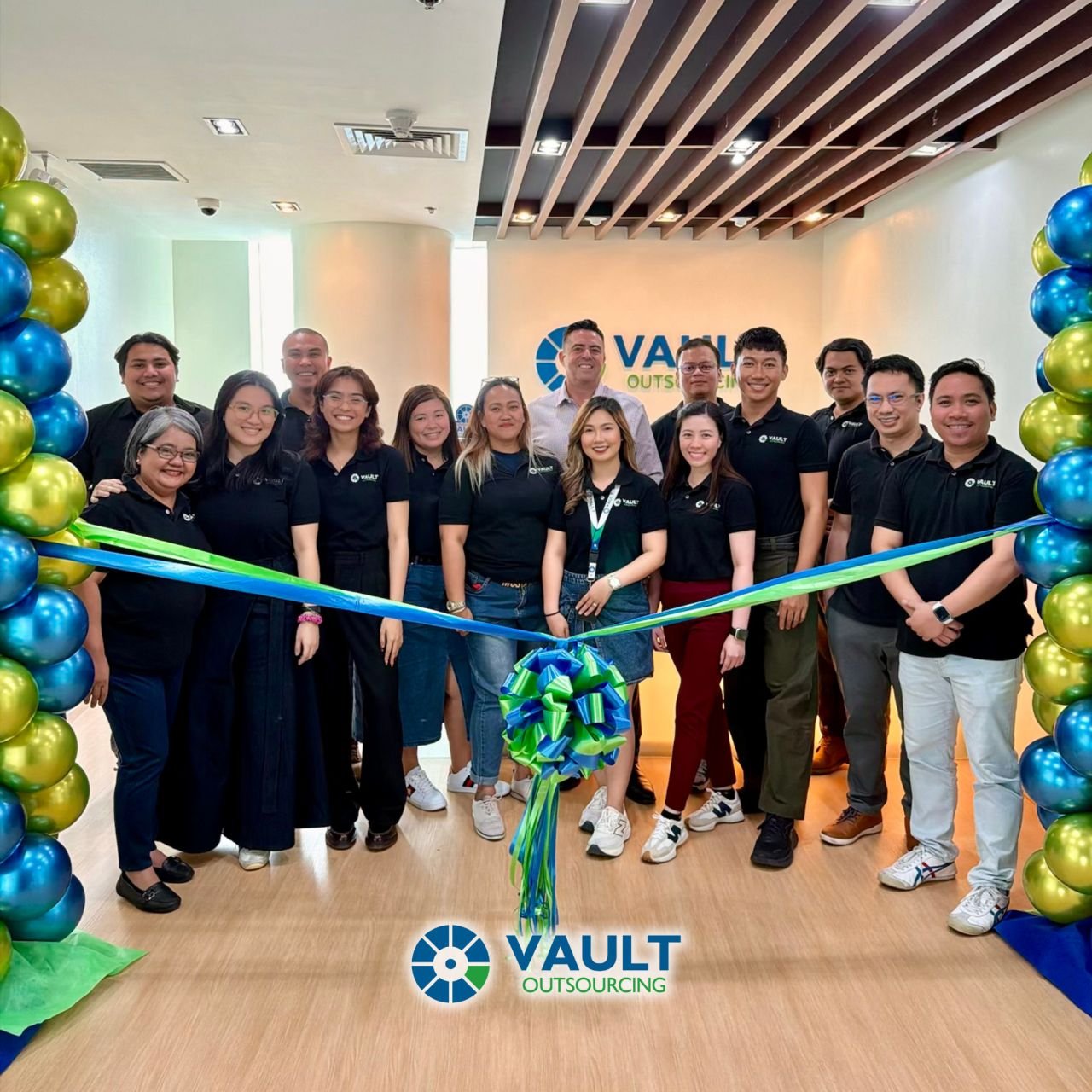
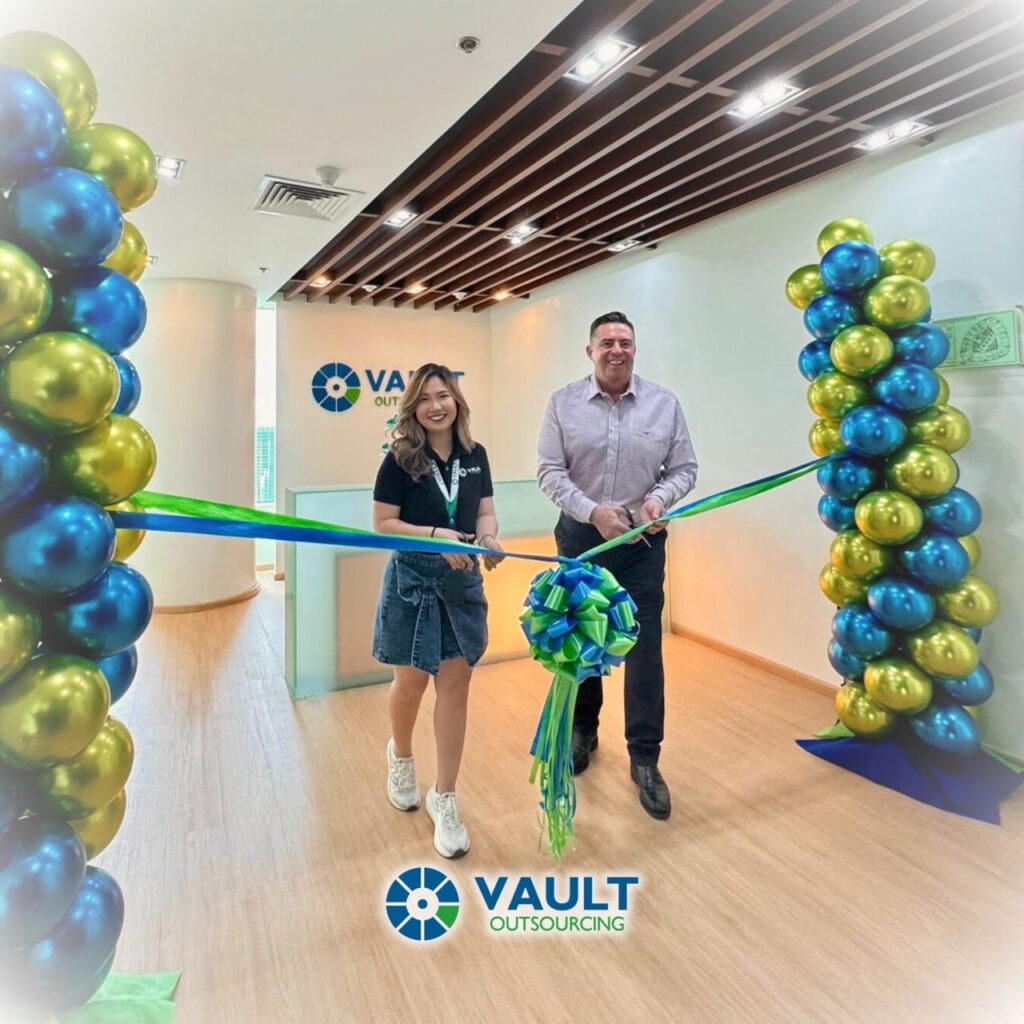
Vault’s leadership story includes Beryl Fauni, who joined the company as a collections agent ten years ago and now serves as its Chief Operating Officer. She and Hutton cut the ribbon at the opening of the company’s newer office at Insular Life Corporate Centre in Muntinlupa, in the south of Metro Manila.
Fauni’s progression is an example from Vault of an employee moving from a frontline collections role into senior leadership. For employers, the relevant question is how a provider develops people and maintains operational knowledge as teams grow. Ask who will lead the proposed team, how those leaders will learn the client’s processes and how the provider supports continuity if responsibilities change.
Vault’s website also carries an endorsement from Mark Stephenson, Director of Freedom Finance: “Anyone who has concerns about outsourcing should put them aside and speak to Dean.” This is a testimonial attributed to Stephenson on Vault’s site. Buyers can consider it alongside their own assessment of the service scope, proposed team, reporting and controls.
How to assess an offshore finance partner
Vault advises financial services buyers to look for local regulatory expertise, relevant industry experience, strong security, working hours aligned with the client’s and transparent reporting. It also argues that a single price covering everything is the clearest model for finance teams. Together, these points make a useful starting framework for procurement discussions, whether an employer is assessing Vault or another provider.
Test industry experience against the actual role. Ask which tasks the proposed employees will perform and what knowledge or skills are needed to do them well. A partner’s familiarity with financial services may be useful, but employers still need to check that screening and training match the work, systems and procedures involved. For wider context on the Philippines as a hiring destination, GWS has an overview of hiring Filipinos.
Make reporting and working hours concrete before a team starts. Agree when the team should be available, who it reports to, which measures will be reviewed and how exceptions will be raised. “Transparent reporting” is most useful when both parties know what information is needed and how it will guide decisions. A single price may make costs easier to interpret, but the buyer should still check what work and support the proposed arrangement includes.
Vault says its 30 day satisfaction period gives clients a defined point to discuss whether a new team is meeting expectations. To make that review useful, employers should agree expectations in advance and decide how feedback will be gathered. Consider work quality, adherence to the client’s process, communication and whether management arrangements are functioning as intended. An exit option is more meaningful when paired with a clear brief and a fair way to assess performance.
Turn the model into a workforce brief
The useful lesson is not simply to outsource collections or choose a provider with a specialist label. It is to describe the work precisely, decide which policies and decisions stay in-house, and test whether a partner can recruit and support people for those requirements. Vault’s account brings together specialist roles, dedicated staffing, client-owned processes, security credentials and a stated review period as elements for employers to examine.
Before approaching providers, write down the tasks, skills, systems access, supervision, working hours and reporting your team requires. Identify what a provider would manage and what your business retains, then use those points to guide the discussion. This gives HR, operations, procurement and project stakeholders a shared basis for assessing whether the model fits the work.
If you are considering a Philippines-based team, make your next step a workforce brief that sets out the roles and operating requirements you need to solve. Contact Global Workforce Solutions to discuss the recruitment need and the scope you are considering.