
Andy Schachtel Keeps People in the Loop
Sourcefit founder Andy Schachtel’s approach to AI puts workforce feedback, access to tools and human oversight at the centre of change.

Andy Schachtel’s approach to AI offers a practical lesson for Australian employers: ask the people doing the work how the technology affects their jobs, then keep human judgement in the workflow. His account of Sourcefit’s growth connects that principle to access, productivity and the way work is designed.
A company that began with one outsourced developer
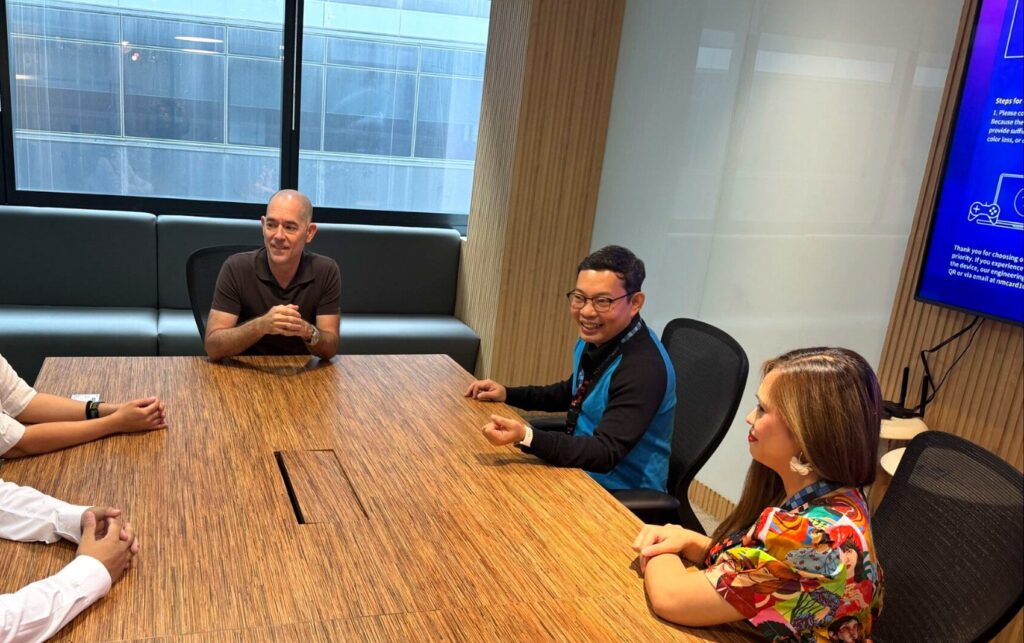
Schachtel’s route into outsourcing began well before Sourcefit. In a May 2025 interview with Pulse 2.0, he described an early career in traditional media production. After presenting on Japanese television, he established a commercial production company that produced advertising for Japanese agencies Dentsu and Hakuhodo and clients including Sony, Toyota and Coca-Cola Japan. He also developed an online short-video platform before YouTube and worked on early mobile websites as mobile data became available.
“Put the tool inside the workflow, with a person responsible for the outcome.”
A major Vodafone project brought those experiences together. Schachtel described it as the world’s first international social networking platform built for mobile. With limited resources for development, he looked outside his local market. After some early difficulties, he found the support he needed from developers in the Philippines.
The experience showed him what outsourcing could make possible: he said he could engage a senior developer and two junior developers for the cost of one local hire, if a suitable local person could be found. Without that option, he believed the project would not have progressed. He came to the Philippines in 2009, and Sourcefit grew out of that work.
Sourcefit had passed 2,000 employees by 2024. The company reports more than 220 clients and delivery centres in six countries: the Philippines, South Africa, the Dominican Republic, Madagascar, Armenia and the United Kingdom. For employers, the origin story is less about copying a particular staffing model than recognising how a hard-to-fill capability can be assembled when the right people are not available locally.
Building tools when existing ones fell short
Sourcefit’s early Vodafone work also shaped its approach to technology. The Self Central platform operated across more than 15 markets, but existing moderation tools did not meet the client’s requirements. The team built its own content moderation platform, with grading, workflows tailored to each country and a wellness programme for moderators. Sourcefit reports compliance with content standards of more than 99% while moderating more than 10 million items a year.
The company continued developing systems for its own operating needs. It built an HR system in 2016, then launched Knit in 2024. Schachtel has described Knit as a way to bring a mostly remote workforce together in one place, combining engagement and collaboration with a social element. Its AI solutions brand, WorkingAI, builds custom AI into clients’ existing workflows.
At the 2026 Asia-Pacific Stevie Awards, Sourcefit received a Gold Stevie for Excellence in Innovation in Artificial Intelligence for Knit and WorkingAI, as well as a Silver Stevie for Excellence in Innovation in Technology Industries. The Business Intelligence Group also named it a winner in the Artificial Intelligence category of the 2026 Fortress Cybersecurity Awards.
The pattern is relevant to employers considering new systems: the starting point is a real operational need, not technology for its own sake. A platform should fit the work people already need to complete, the standards they are expected to meet and the support they require. That does not mean every organisation needs to build its own tools. It means testing whether a proposed tool solves a defined problem in the actual workflow.
Andy Schachtel’s people-in-the-loop approach

Schachtel’s approach to AI at Sourcefit centres on keeping a person involved. Speaking on the Outsource Accelerator podcast in August 2025, he said none of the AI systems the company had built had eliminated everyone from the process. In each case, a person remained in the workflow to confirm, check and control the work.
That position is informed by what employees say about the technology. In a Forbes article published in September 2026, Schachtel reported that Sourcefit surveyed nearly 2,000 employees working in teams managed by clients between February and July 2026. He had expected a much larger share to believe AI would harm their jobs; about 7% said they thought it would negatively affect their role. Meanwhile, 68% reported a moderate or significant positive impact on productivity.
In the same account, he wrote: “They are not afraid. They feel more productive.” Employees identified access to the tools, rather than fear, as the biggest barrier they faced. That distinction matters for workforce planning. A team cannot make a fair assessment of a technology’s value if staff lack access to it, have not been shown how it applies to their tasks or have no clear way to flag problems.
Schachtel argues that AI can narrow the quality gap that once made buyers hesitant about offshore teams. In his view, an analyst in Manila using the same AI tools as an analyst in New York can produce work that is closer in quality and faster, while costing less. That is his assessment of how the technology can affect offshore delivery, rather than a guarantee of the same outcome in every role or business.
For Australian employers, the useful question is therefore not simply whether a task can be automated. It is which parts of the work benefit from assistance, where human checking remains necessary and how staff can access and use the tools responsibly. Keeping a person in the loop can help make responsibility visible: someone is still accountable for reviewing the output, applying context and escalating an exception.
“They are not afraid. They feel more productive.”Andy Schachtel · Sourcefit founder and CEO, Forbes, September 2026
How he measures success
In a 2023 interview with Business & Finance, Schachtel said his motivation was not a single product or industry. It was the challenge of building something from nothing. The priorities he described changed as Sourcefit developed: first establishing an office and making payroll, then building a brand and careers for employees, followed by greater attention to community and the environment. He also spoke about creating a future for Sourcefit that would not depend on him.
He summed up his definition of success as “Happy customers, happy employees, a healthy environment and strong growth.” The idea behind it is that employee goals and company goals are connected. For employers, that is a useful test of whether a workforce change is working: operational outcomes matter, but so do the experience of the people delivering the work and the organisation’s ability to keep developing.
Sourcefit’s community activity gives the environmental and social parts of that definition a practical form. Its programmes include empowerED for employability, Go Beyond for food security and Soilmate for environmental rehabilitation. By 2023, the food programme had reached 3,000 families. Sourcefit now reports that more than 15,000 at-risk families have been supported across its community work and that 98% of employees take part in CSR initiatives.
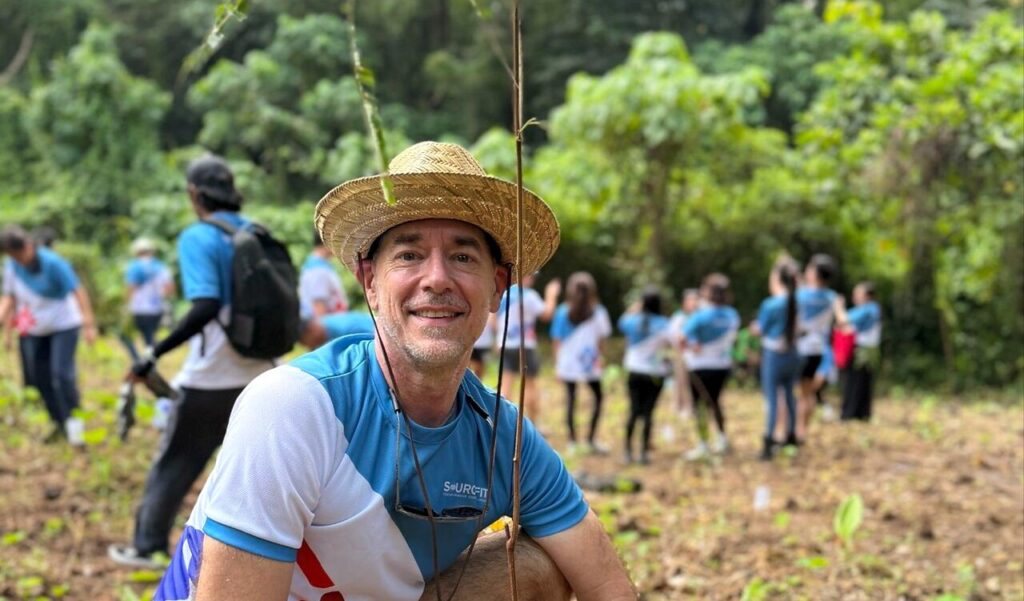
In 2024, 120 Sourcefit volunteers planted 1,100 trees at the La Mesa Watershed with the Million Trees Foundation. At the 2026 Asia-Pacific Stevie Awards, the company received a Silver Stevie for Innovative Achievement in CSR and a Bronze Stevie for Excellence in Social Impact. Schachtel has also described advice he has drawn on as a CEO, coach and parent: a Michael Jordan Nike commercial about repeated failure being part of success. The point is persistence through setbacks, rather than expecting every new initiative to work immediately.
Where he sees the future going
Schachtel does not claim to know how AI will ultimately change offshore work. In Forbes, he pointed to examples that can be read in more than one way: personal computers created new assistant roles, while ATMs did not end bank teller jobs until mobile banking removed the need to visit a branch. The lesson he draws is that technology’s effect depends on how it changes the wider service and the work around it.
His response is to keep asking employees. He has said Sourcefit will repeat its survey and take a rise in concern seriously. For now, the answer employees gave him was that they wanted better access to the tools often assumed to be a threat to their jobs. That is a reminder to avoid deciding what a workforce thinks before asking the workforce itself.
Schachtel has also said, “We’ll never be just a sole provider of people.” The statement reflects a model in which people, tools and workflow design sit together, rather than treating technology as a separate layer or a simple replacement for workers. For business leaders, the future may remain uncertain, but clear communication and feedback can still guide decisions made now.
What Australian employers can take from the profile
The practical lesson for Australian employers is to make workforce consultation part of technology planning. Before introducing AI or automation, explain what the tool is intended to do, ask staff where it could help and identify which decisions need human review. After implementation, revisit those questions with the people doing the work. Their experience can show whether the tool is genuinely useful, whether access is equitable and where training or process changes may be needed.
This also connects with broader workforce planning. If new technology changes the skills required for a role, employers can consider development alongside recruitment. GWS has outlined approaches to addressing skills shortages, including investment in employee training and development. Where recruitment involves international candidates, clear role requirements and communication can help establish whether experience and expectations align; see GWS guidance on what candidates may need to demonstrate in the global job market and preparing for international work.
None of these steps removes the need to assess technology, people and outcomes in the context of a particular operation. But they give HR and project teams a grounded starting point: understand the task, involve the workforce, provide appropriate access and keep a person responsible for checking consequential work. When a tool changes the job, review the role and the support around it rather than assuming the effect is self-evident.
For employers, Andy Schachtel’s example is a prompt to ask workers directly what AI is changing and what they need to do their jobs well. If your organisation is reviewing workforce requirements or planning recruitment, contact Global Workforce Solutions to discuss the people and capability your operation needs.