
International Recruitment for Australian Manufacturing
A practical approach to defining production needs, assessing global candidates and preparing Australian manufacturing teams for new starters.

Manufacturing recruitment can help Australian employers widen their search when local sourcing is not meeting a clearly defined workforce need. A considered international hiring plan connects production requirements with role criteria, candidate assessment, compliance checks and practical support for joining the workplace.
What manufacturing recruitment needs to solve

Before considering international candidates, establish what is creating the hiring pressure. It may be a specialist capability, difficulty filling a particular shift, planned production growth or reliance on short-term labour. These are different problems, and each calls for a considered workforce response. International hiring is most useful when it addresses a specific gap rather than serving as a general answer to a vacancy.
“A vacancy is not yet a workforce plan.”
Bring operational leaders and HR together to identify which tasks are falling behind, where capability is missing and what current employees are covering. Check how long the need is likely to continue, and whether training, work design, equipment, scheduling or local recruitment could also help. This gives decision-makers a clearer view of the problem and a fair basis for comparing options.
Distinguish a short-term increase in orders from a continuing capability requirement. Consider the effect on supervision, team capacity and training, as well as the number of people required. A useful decision brief states the operational impact, the outcome hiring should deliver and any conditions that could make the plan unsuitable. For broader planning context, employers can review how international recruitment can support hard-to-fill skilled roles.
Translate production demand into a workforce brief
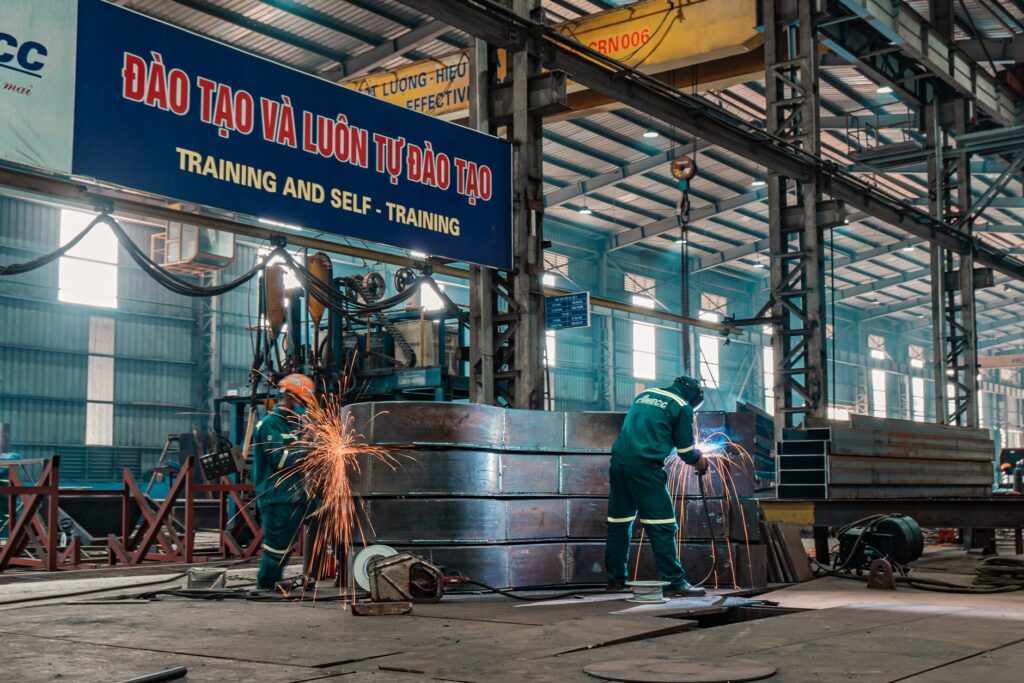
A job title rarely gives a recruiter enough detail. Describe the work the person will perform: the equipment or process involved, quality requirements, expected pace, handovers and decisions they must make. Separate essential capabilities from preferences. If every desirable attribute is treated as mandatory, the brief may screen out candidates who could succeed with appropriate site training.
Explain the work environment accurately, including relevant physical demands, noise, temperature variation, shift work, hygiene controls and coordination with other functions. These details shape candidate expectations and help employers assess suitability fairly. Replace vague criteria such as “good cultural fit” with observable behaviours, such as following procedures, escalating a quality concern or communicating a safe handover.
Confirm that the brief reflects the actual location, roster, reporting line, employment terms and training plan. Identify who will supervise the role and how performance will be reviewed. For multiple vacancies, distinguish shared requirements from differences between sites, lines or shifts. This helps ensure candidates hear a consistent description of the opportunity they may be offered.
Agree on assessment criteria, decision-makers and record-keeping before reviewing applications. Test the brief with supervisors, experienced operators and safety or quality representatives; they may identify hidden requirements or unnecessary barriers. A manufacturing recruitment brief should describe genuine job needs, not assumptions about where a candidate has worked or how they learned a skill. GWS outlines a practical sequence for starting an international recruitment program.
Assess capability for the operating environment

International candidates may have relevant experience under different equipment, process names or workplace conventions. Assess what they can demonstrate rather than whether their previous employer used the same terminology. Structured, job-related questions can explore how a candidate responds to a defect, follows an instruction, manages a handover or seeks help when a process is outside specification. Apply consistent core criteria to each candidate.
Where practical, combine interview evidence with a role-relevant technical discussion or work sample. It should reflect genuine tasks, suit the selection stage and not ask candidates to provide unpaid productive work. Explain the instructions, allow questions and record evidence against agreed criteria. If language proficiency matters, specify the communication required—for example, understanding safety instructions or completing a production record—rather than relying on a broad impression.
Check qualifications, work history and references consistently and in line with the role. A credential may need interpretation in context, and a job title may not map neatly to Australian terminology. Ask about tasks performed, level of responsibility and machinery or systems used. If a competency cannot be verified during recruitment, determine whether it can be safely developed through site training or is essential before commencement.
Use assessment to establish a shared understanding of the work. Explain the production environment, roster, reporting structure and available support, then invite questions. Candidates should have a realistic opportunity to consider whether the role suits their experience and expectations. For prompts on role clarity, candidate checks and workforce support, employers can review common international recruitment mistakes to avoid.
“A candidate can bring relevant experience, but the employer must make the site-specific path to safe, effective work clear.”Key insight · Global Workforce Solutions
Plan compliance and site readiness

Recruitment decisions need to sit within the employer’s legal and operational responsibilities. Do not assume that a candidate’s experience, nationality or previous work establishes permission to work in a particular role in Australia. Check current visa and work-right information through the Australian Department of Home Affairs and seek qualified advice if you need help interpreting obligations. Individual circumstances can differ, so avoid promising a visa outcome or start date before relevant checks are complete.
Assign responsibility for checks and set out when each must be completed. Depending on the role and circumstances, this may include verifying identity and relevant documents, confirming proposed employment arrangements and handling recruitment records appropriately. Build these steps into the process rather than leaving them until after a candidate expects to start. Explain what is being checked, what remains unresolved and who will provide an update.
Readiness also means confirming that the site can provide induction, equipment familiarisation, protective equipment, supervision and access arrangements. Identify who will answer practical questions and how a new employee can report a concern. For site-specific or safety-critical work, clarify the sequence for induction, training and task authorisation; a general orientation may not cover formal instruction or assessment.
Coordinate HR, operations, safety, payroll and recruitment so that the offer, role description, roster and onboarding arrangements align. A mismatch between selection discussions and site readiness can undermine trust and disrupt planning. Regional employers should also consider transport, accommodation information and access to essential services, while clearly describing what support is available. GWS provides further guidance on planning international recruitment for regional Australian employers.
Make onboarding part of the hiring plan
Selection does not end when an offer is accepted. Plan a staged introduction to the team, production process, quality expectations, safety procedures and communication channels. The direct supervisor should know what the employee has already been told and what remains to be covered. This helps prevent the new starter from carrying the full responsibility for working out how the site operates.
Agree on an initial training plan before commencement. Identify which tasks can be observed, practised with supervision and assessed for independent work. Make clear who signs off each stage and how an employee can raise uncertainty without pressure to work beyond their capability. Training must reflect the site’s equipment and procedures, even when the employee has performed similar work elsewhere.
Prepare the existing team as well. Explain the role, reporting arrangements and how colleagues will share information or provide support. Supervisors can set expectations for respectful communication and make time for questions. Where terminology or language differences could affect instructions, use plain language, demonstration and confirmation of understanding. These approaches can support clear communication across the whole team.
Provide practical information about the first day, site access, required documents, contact people and any equipment the employee should bring. If relocation or settling-in support is relevant and within the employer’s remit, state exactly what is available and who to contact. Schedule check-ins with the employee and supervisor to identify unclear expectations, training gaps or missing support early. Use what you learn to refine future onboarding.
Review outcomes and refine the workforce plan
Set measures that connect hiring to the reason for recruiting. Depending on the need, review whether the role is being filled as intended, capabilities are developing, supervisors have adequate support and production handovers are working. Avoid judging success by one headline measure: a person may be in post while training, retention or team integration still needs attention.
Agree who will review progress and when, using information already available to the business where appropriate. This might include training records, quality observations, employee feedback and supervisor assessments. Handle employee information appropriately and be clear about the purpose of the review. The aim is to understand whether the workforce plan is meeting its operational objective and what should change.
If the need has shifted, revisit the plan rather than automatically repeating the same recruitment request. The process may have changed, a different capability may now be essential, or local training may be possible. If a role remains hard to fill, check whether the brief, assessment and employment offer accurately reflect the work. GWS’s guide to hiring global talent offers further context on sourcing, selection and integration.
Document what worked and what needed adjustment. This can improve future briefs, clarify responsibilities and help managers plan training before another hiring need arises. It also helps position international recruitment alongside local attraction, internal development and changes to work design, rather than treating each vacancy in isolation.
As a practical next step, prepare a short brief covering the production gap, essential capabilities, site conditions and onboarding owner, then contact Global Workforce Solutions to discuss your workforce requirement and whether international sourcing fits your plan.