
Juan Longoria Wants AI to Give Leaders Their Time Back
Juan Longoria’s career offers employers a grounded way to assess AI: look beyond efficiency and ask whether frontline leaders have more time to coach.

Juan Longoria’s view is that AI should give leaders more time to coach, not simply help operations process more work. His experience across customer care and BPO operations shows why employers need to connect technology choices with frontline leadership, customer recovery and the way teams work.
In August 2026, Longoria said he had found something he had not had in a long time: “space to build”. He used that time to develop CCPlaycaller, a coaching tool for contact centre leaders, then became Vice President of Customer Care at Enseo in September. The through-line is a belief that technology should make room for the human work of leading. The original BPOAI.ai profile of Juan Longoria traces that idea through his career.
“AI isn’t the strategy. It’s the accelerator.”
— Juan Longoria, LinkedIn, August 2026
Source: Juan Longoria Wants AI to Give Leaders Their Time Back
From the fields to the support floor
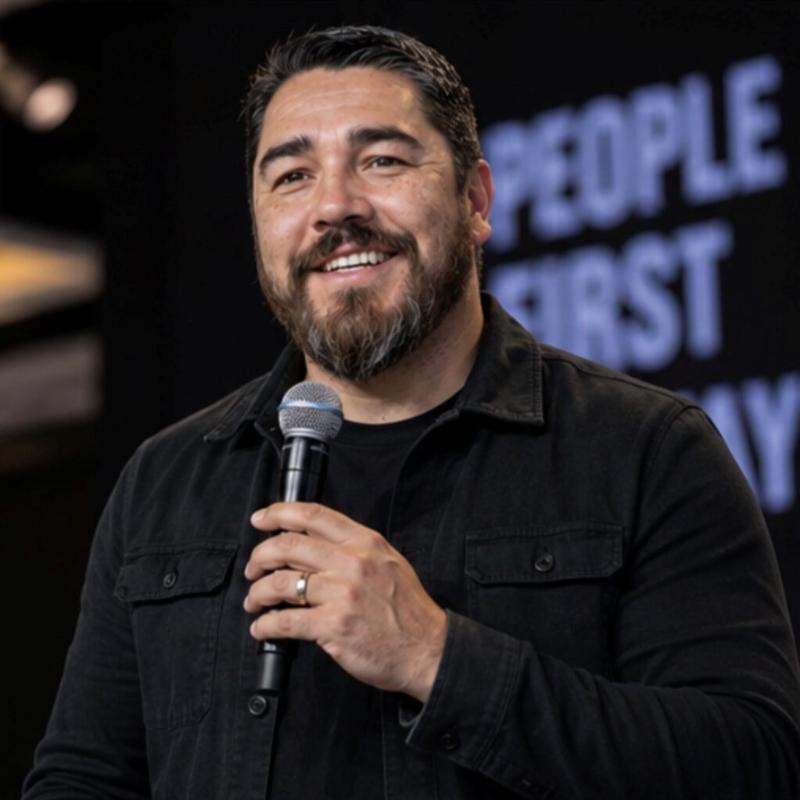
Longoria describes himself as “a kid from San Benito”. In an October 2026 Q&A with Counsel Collective, he recalled working Michigan’s fields with his family in summer, bartending without a clear career plan and taking what he thought would be a short-term call centre job to help pay tuition.
“Give leaders time to coach, not just more signals to interpret.”
That role was technical support at Expert Global Solutions, now part of Alorica, from 2000 to 2003. According to his LinkedIn profile, he helped customers resolve dial-up and broadband problems and trained new starters. He later held supervisor, analyst, partner programme and operations roles at DISH Network, followed by a year at Pocket Communications.
In late 2008, he joined T-Mobile, where he spent nearly 14 years in care operations. He was part of the company during its Team of Experts redesign, an experience Matthew Dixon later discussed in Harvard Business Review. Longoria’s reflection on innovation goes beyond buying systems: “Innovation isn’t defined by the technology you buy. It’s defined by the problems you’re willing to solve and the investments you’re willing to make in your people.” For employers, that means considering training, role design and manager support alongside technology.
How Juan Longoria learned BPO from the inside
In 2018, T-Mobile sent Longoria to Manila as Senior Manager, Global Care Operations. He told Counsel Collective that a less visible part of the role was moving his family across the world to take on work he had not done before. The move also put him inside the day-to-day realities of a partner operation.
His profile says he took responsibility for an underperforming partner site and helped raise its Net Promoter Score from 55 to 70 over 12 months. It moved from 25th in T-Mobile’s global network to first among its BPO partners. The profile credits coaching, operational restructuring and closer alignment between onshore and offshore leaders. The result joined performance improvements with consistent leadership and partner coordination.
From 2021, Longoria directed global messaging and chat care for the T-Mobile and Sprint brands. His profile describes a remit covering more than 7,000 BPO full-time staff across international sites, and says he led vendor selection for digital care. At that scale, technology decisions, performance expectations and frontline coaching need to connect across teams. A dashboard can surface a pattern; leaders still need time and context to act on it.
For employers reviewing an outsourced operation, this points to the importance of clear communication between client and partner leaders, useful coaching routines and shared customer outcomes. Longoria’s example is not a universal model, but it shows why people, processes and partner alignment belong in the operating design.
From telecom to rentals and hospitality
In 2022, Longoria moved to Zillow, where he led client services and business operations for Zillow Rentals until August 2026. In September, he joined Enseo, which describes itself as a technology partner for modern hospitality. Though the industries changed, customer care remained central to his work.
Longoria said the move felt “a little like coming home”, returning him to technology he could see, touch, install and troubleshoot. He told Counsel Collective that his first task was “listening before I change anything”. For a leader entering a new organisation, listening can reveal customer needs, team routines and practical constraints before any redesign.
In October, he spent a week working night shifts alongside one of his support teams. He wrote that there was no easy route to excellence in customer support and that his role was to make the team’s work easier so its members could keep helping customers. This means understanding the pressures that may not appear in a performance report.
Longoria has also said, “Confidence rarely shows up first. Courage does.” For workforce leaders, the line reinforces the value of learning from teams before making decisions that affect how they serve customers.
“AI isn't the strategy. It's the accelerator.”Juan Longoria · Vice President of Customer Care at Enseo
What he counts as success
Longoria questions whether keeping more customer contacts away from people is, by itself, a useful definition of success. At the turn of 2026, he described containment as a metric that can become a vanity measure. In his view, what happens when automation fails—and whether the customer can recover—says more about the experience.
He returned to the question in June after following posts from Customer Contact Week: is AI creating a better customer experience or simply making the old model more efficient? Containment can have a place, he argued, but cannot be the only measure. If customers remain frustrated, staff are still searching for answers and leaders cannot see what is happening, more work remains.
For employers defining outcomes for automation, this means examining whether customers can get help when a tool does not resolve an issue, whether escalation paths work and whether leaders can identify recurring problems. It is not an argument against automation; it is a case for measuring the full service experience alongside efficiency.
Longoria returns to the demands placed on frontline leaders: running operations, managing performance, reviewing quality, spotting patterns, choosing what to coach, holding conversations and following up. The work of actually leading has to fit around all of that. CCPlaycaller is intended to help close the gap. When introducing it, Longoria said it would not replace a leader’s judgement, but give that judgement a better starting point.
He is also developing a leadership method called Built, Not Born. Counsel Collective describes its premise as the belief that delivering results and caring for people are compatible. Employers can put that idea into practice through coaching capability and ongoing learning. GWS has further reading on building an adaptable workforce and skills development and training.
Where he says AI is going
Longoria does not see AI as a reason for customer support to move to the edge of the business. In a New Year post, he argued that the technology is forcing support to mature. It can expose unclear ownership, weak escalation paths and fragmented tools more quickly; he described Tier 1 as becoming architecture, with people working above it.
In August, he said strong culture, leadership and processes give AI something to amplify, while weak foundations make gaps more visible. He argued that discussion should reach beyond copilots, automation and agentic AI to consider how organisations lead. Employers can start by checking who owns the customer outcome, when a person steps in and how teams learn from recurring issues.
Longoria also asks leaders to consider the habits their service channels have taught customers. Removing a channel might address an internal operating concern, but customers may not understand the reason. His advice is to understand the behaviour an organisation has encouraged before changing it. That calls for assessing customer impact as well as internal efficiency.
At Enseo, his current focus brings these ideas back to the work: listening to the team, understanding its environment and keeping care human as tools change. The practical point is not that one technology will solve every service challenge. Leaders need a clear view of the work and time to help people do it well.
What Australian employers can take from his example
For Australian employers, HR teams and project leaders, Longoria’s experience offers a useful test for an AI or workforce investment: what will change for the people delivering the service? A tool may make information easier to access, but its value depends on whether it helps managers make decisions, coach effectively and support reliable resolution. This matters when service work is distributed across internal teams, partners and locations.
Before choosing a system, map the decisions a frontline leader must make and where their time goes. Ask team leads which information they can act on, what interrupts coaching and which customer problems are hardest to resolve. Then assess whether the technology addresses those needs and how the team will know if it improves the experience rather than shifting work elsewhere.
Build people and process considerations into implementation. Explain what the tool is intended to support, let leaders test it against real tasks and gather feedback from the teams using it. Review service outcomes as well as productivity, including whether escalation works and managers can spot patterns that need coaching or process changes. Organisations considering capability development can explore GWS guidance on developing skills and workforce capability.
The most useful question may be simple: if AI gives a team leader time back, is the organisation making space for that time to be spent with people? If you are planning a customer-care or wider workforce change, contact Global Workforce Solutions to discuss the hiring need, team structure or workforce brief behind the project.