
Alin Roșca Wants Every Customer Conversation Heard
RepsMate founder Alin Roșca is taking an AI-led quality approach to the Philippines, with a message for BPO leaders: augment people, do not replace them.
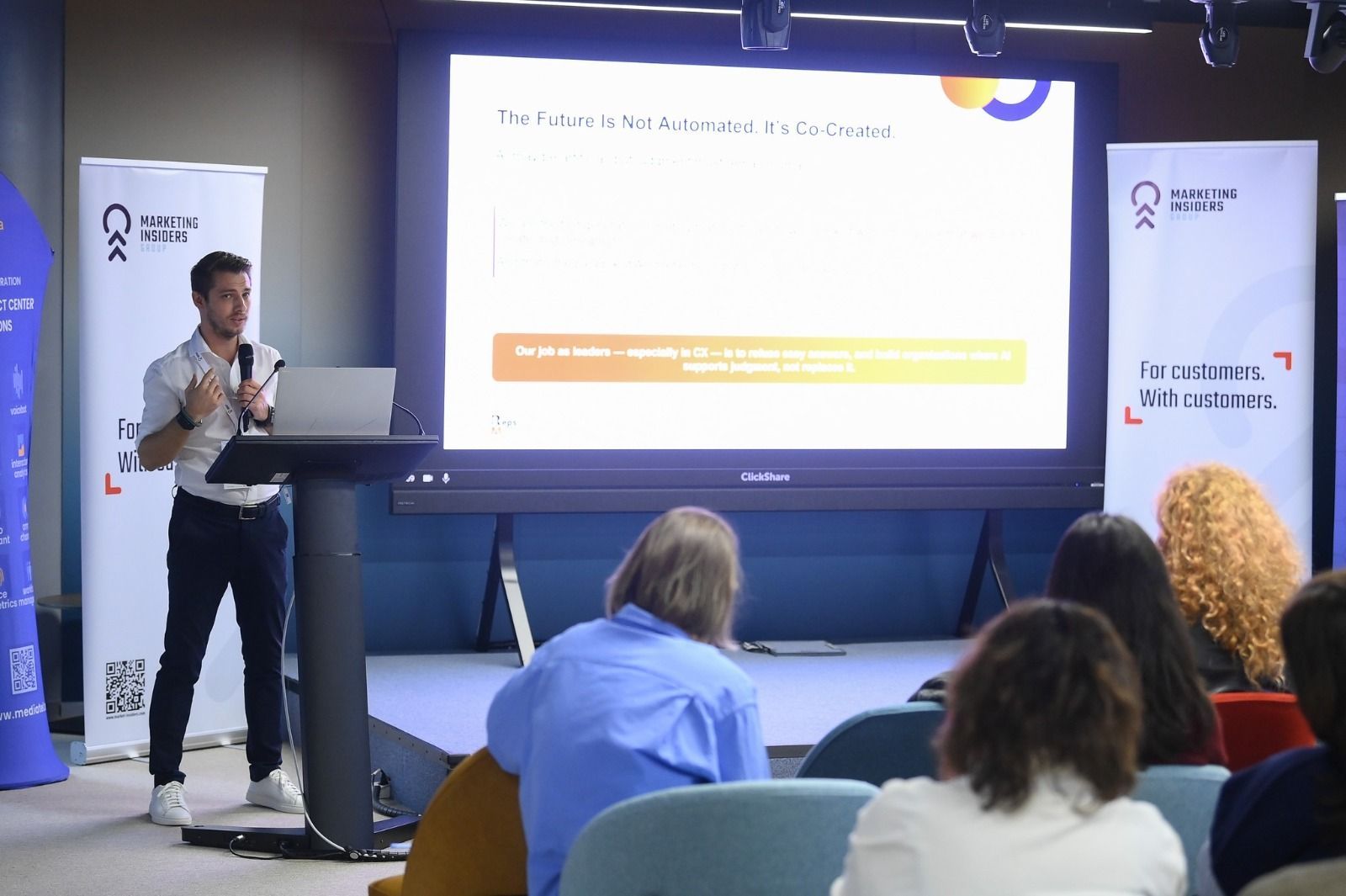
Alin Roșca wants BPO operators to use AI to hear and assess every customer conversation, rather than rely on a small random sample. The RepsMate founder’s entry into the Philippines brings that ambition into a market he believes can be a global BPO hub. For Australian employers, the story raises a practical question: what is reviewed, and how are the resulting insights used to support people?
A sales role sparked an idea

Roșca’s route to RepsMate began with a return to Romania. After coming back from the UK in 2019, with ideas taking shape, he took a casual sales job. The experience gave him a close-up view of customer interactions and a question that would become the basis for a company: could businesses understand more of what their customers were saying?
“Technology should help teams hear more without losing sight of the people doing the work.”
He built the business with George Tarida, a developer whom RepsMate credits with more than 50 enterprise applications. Profit.ro reported in July 2021 that Roșca, Tarida and Mihai Guran founded RepsMate in 2020. The early period was difficult by the company’s own account, with cash-flow pressures, fundraising hurdles and little market awareness.
Profit.ro reported that RepsMate received €50,000 from investors in TechAngels Romania in January 2021, alongside a convertible loan from business angels and Cleverage VC. The company has described its first client as more than a customer: “They invested in our vision and in us as people.”
RepsMate now says it works with Telekom, eMAG, Vodafone and Regina Maria. That customer list gives context to its focus on conversations across service environments, but the central idea remains the one Roșca encountered in sales: the quality of customer understanding depends on what an organisation can actually hear.
What full customer conversation coverage could change
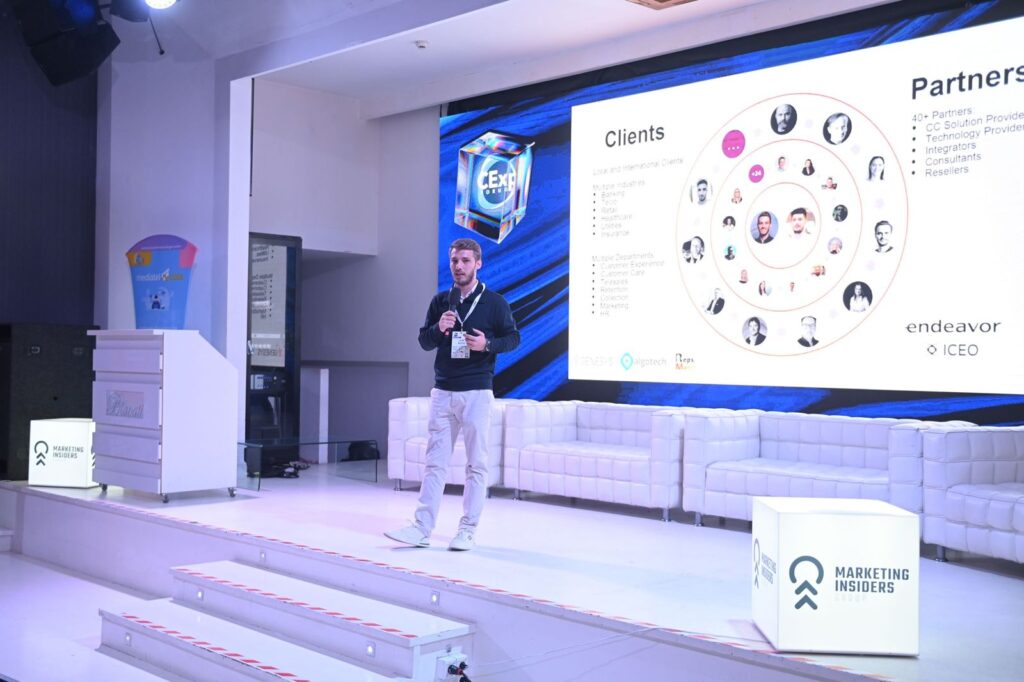
In 2021, Roșca described a common constraint in quality assurance: checking calls at random meant reviewing no more than 5% of them. The remainder could contain useful feedback, examples of effective service or recurring problems, yet remain outside the routine quality review.
“Now we offer the possibility of analyzing all conversations, on all channels: voice, text, video,” he told Forbes Romania, while noting that the company was concentrating on voice at the time. RepsMate’s stated aim was to extend analysis beyond a small sample so teams could look for patterns across interactions, rather than draw conclusions only from the calls selected for review.
Roșca described the product’s purpose this way: “RepsMate improves sales quality by deciphering the emotions and context of conversations.” That is a company proposition, not a guarantee that automated analysis will interpret every exchange correctly. For a buyer, the useful distinction is between making more material available for review and deciding how people will validate and act on what a system identifies.
For a BPO client, broad coverage could make it easier to ask more specific questions about customer experience, process adherence and coaching needs. It also changes the discussion with a service partner: rather than asking only how many calls supervisors sample, a buyer can ask what channels are included, how quality criteria are applied and how unusual results are checked by people.
AI tools designed around service work
RepsMate describes its platform as focused on customer service rather than general-purpose AI. Its named tools include Case Summarization, Agent Assist and Automated QA. The company says Automated QA can assess 100% of interactions against a client’s quality standards, and it offers cloud installation or deployment on a client’s own servers.
Those are vendor claims that prospective buyers should test against their own requirements. A useful evaluation would examine whether the quality standards reflect the real service promise, how the system handles different interaction types and what agents and supervisors see when an evaluation is produced. The value depends not simply on the volume analysed, but on whether outputs are understandable and relevant to the work.
RepsMate says its smaller language models are fine-tuned for customer-service use cases, which it argues can produce more relevant insights than generic tools. It also says integration with existing systems can take “as little as one week, with minimal IT resources required”. For an employer, that should be treated as a statement to verify in the context of its own technology environment, data requirements and approval processes.
Deployment choice is another part of the assessment. A cloud option and installation on a client’s own servers may suit different operating constraints, but neither option should be assumed to meet a particular organisation’s security needs without review. Australian teams assessing AI for contact-centre work can also compare practical implementation questions with guidance such as Lyriq’s discussion of moving contact-centre AI towards production.
“We still believe in the same vision, in augmenting people, not replacing them…”Alin Roșca · Founder and CEO of RepsMate
How RepsMate describes success
RepsMate says it wants to change how businesses listen to and understand their customers. Its About page describes client success as an obsession, while customer testimonials on its site include Carmen Cucu, Director Patient Experience at Regina Maria, and Nicoleta Iancu in Customer Care at eMAG Group.
For buyers, Roșca’s 5% comparison is a useful starting point because it turns an abstract AI discussion into an operational question: how much of the service is currently heard? RepsMate’s answer, according to its product description, is that Automated QA can evaluate all interactions against the team’s standards. The buyer still needs to establish what counts as an interaction, how the standards are set and how results translate into coaching or service changes.
There is also a workforce question. Roșca has said the objective is to help teams improve performance without reducing their workforce. That makes it important to ask how a system will be introduced to agents, what support supervisors receive and whether analysis is positioned as a way to identify learning needs rather than simply monitor individuals. Those choices shape whether technology supports better service and stronger teams, or creates uncertainty about how performance is judged.
Organisations considering service growth may find it useful to connect customer feedback with broader business planning, rather than treating quality review as a standalone technology project. GWS has outlined related considerations in its guide to business growth and customer-base expansion.
Why the Philippines is the next chapter
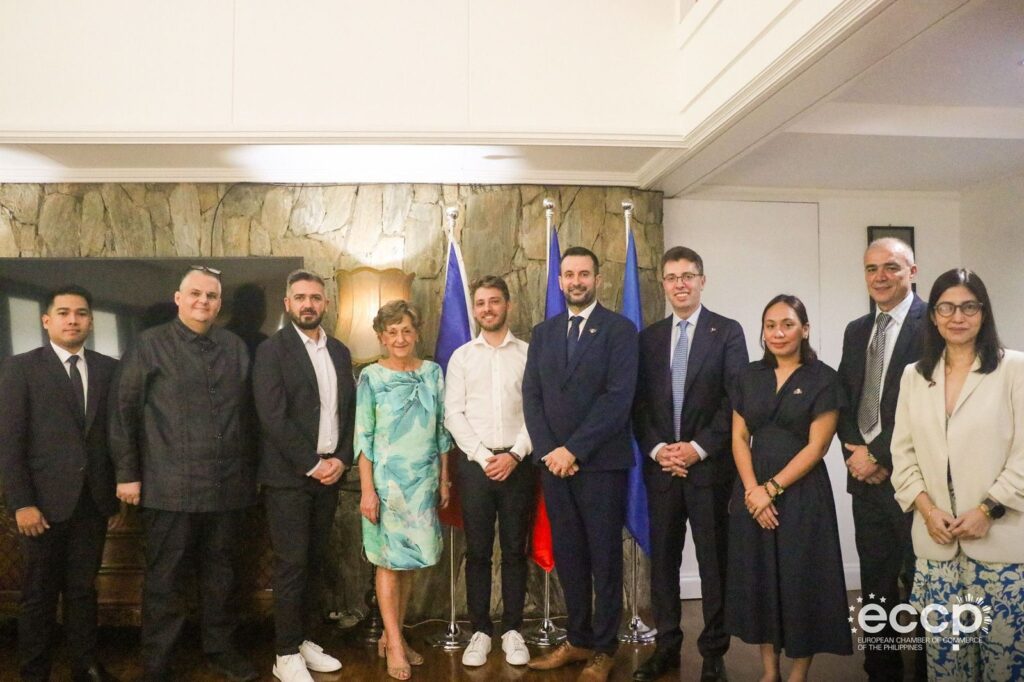
On 18 March 2026, at the residence of Romania’s Ambassador in Makati City, Roșca signed a partnership between RepsMate and the European Chamber of Commerce of the Philippines. The agreement marked the company’s entry into the Philippine market. “We believe in the Philippines being the global hub of the BPO industry,” he told the gathering, according to the ECCP.
At the signing, Roșca said the company intended to help BPO businesses remain competitive and improve their KPIs without cutting their workforce. He restated the people-centred idea behind that position: “We still believe in the same vision, in augmenting people, not replacing them…” The ECCP described RepsMate as a European AI provider seeking to equip customer-care agents with AI rather than replace them.
Romanian Ambassador Răduţa Dana Matache congratulated RepsMate on its “vision and intelligence to choose the Philippines”. EU Ambassador Massimo Santoro also commended the company’s choice. Roșca attended with International Partner Manager Andrei Viorică and Alfred Reiterer, who served as an adviser to the CEO on entering the Asian market, according to the ECCP.
The Philippine Business News reported that the country is RepsMate’s first expansion hub in Southeast Asia. The ECCP-facilitated partnership designates the company an official AI partner. “We believe in local power. We believe in building value within the industry,” Roșca said, according to that publication. RepsMate has also joined the AI Marketplace at BPOAI.ai, where outsourcing buyers can find AI tools intended for BPO teams.
The original BPOAI.ai profile of Alin Roșca and RepsMate’s Philippine entry sets out the company’s account of its origins, product and new partnership. Together, these developments make the Philippines more than a destination for market entry in Roșca’s story: it is where the company says it wants to build relationships with the BPO industry and support local capability.
What Australian employers can take from the story
Roșca’s approach offers Australian workforce decision-makers a practical prompt, not a reason to adopt a particular product. Start with the quality problem. If a team checks only a limited sample, identify what it wants to learn from more complete coverage and how that could help customers, agents and supervisors. Then assess whether an AI tool can produce evidence that is useful in the team’s actual service environment.
When reviewing a BPO partner or technology proposal, ask who defines the quality standards, which channels are included, how findings are checked and what happens when an automated assessment appears wrong. Ask how the tool will fit with existing systems, what deployment arrangements are available, and what the supplier means by its implementation claims. Keep the conversation focused on measurable service needs without assuming that greater analysis automatically improves outcomes.
Bring employees and operational leaders into the design early. Agents can explain how conversations unfold in practice; supervisors can identify what makes feedback actionable; and workforce teams can clarify how performance information should be used. If AI is intended to augment people, the implementation plan should make that purpose clear in training, communication and day-to-day management.
That people-first test also applies when Australian employers are planning workforce capability in the Philippines. GWS’s information on hiring Filipino talent provides a related workforce perspective, while the GWS team supports employers with international recruitment for mining, construction and manufacturing. The industries and requirements differ, so the starting point should always be the employer’s actual role, capability and workforce brief.
For Australian employers, the lasting question in Roșca’s story is simple: how can technology help a team hear more without losing sight of the people delivering the service? If you are planning an international recruitment requirement in mining, construction or manufacturing, contact Global Workforce Solutions to discuss your workforce needs and share a practical brief for your roles.