
Filipino Skilled Workers for Australian Construction
A practical approach to sourcing Filipino construction talent, verifying trade experience and preparing for a safe, well-planned start on site.

Hiring Filipino skilled workers can help Australian employers address hard-to-fill construction roles when recruitment is tied to defined project needs and careful skill verification. A construction workforce plan should consider trade capability, site readiness, compliance checks and support after arrival—not just candidate availability.
When a broader construction workforce makes sense

Employers may consider international recruitment when local sourcing has not produced enough suitable candidates, a project needs a particular mix of trades, or work is scheduled across multiple locations. The decision should follow a review of the actual work plan: which roles are essential, when are they needed, for how long, and what can be covered through local hiring, training or subcontracting?
“A successful hire depends on more than the recruitment decision.”
For projects with tight sequencing, a vacancy in one trade can affect several connected activities. Map critical roles against the programme and identify where a delay would interrupt handovers, commissioning or work by other contractors. This helps distinguish an urgent capability gap from a general desire to increase headcount. It also gives recruiters a specific brief rather than a broad request for construction workers.
Filipino candidates may bring experience from different project environments, employers and training systems. That is a reason to consider a wider talent pool, not a basis for assuming that every applicant has the same capability or is ready to work in Australia. GWS’s overview of the Filipino workforce discusses potential strengths and the importance of skills development; employers still need to test each person’s experience against the job requirements.
International hiring is most useful when it complements a broader workforce strategy. Record the local recruitment steps already taken, the roles that remain difficult to fill, and the business impact of leaving them vacant. This makes it easier to compare options and explain why the proposed hiring approach suits the project.
Match trades and technical roles to real work
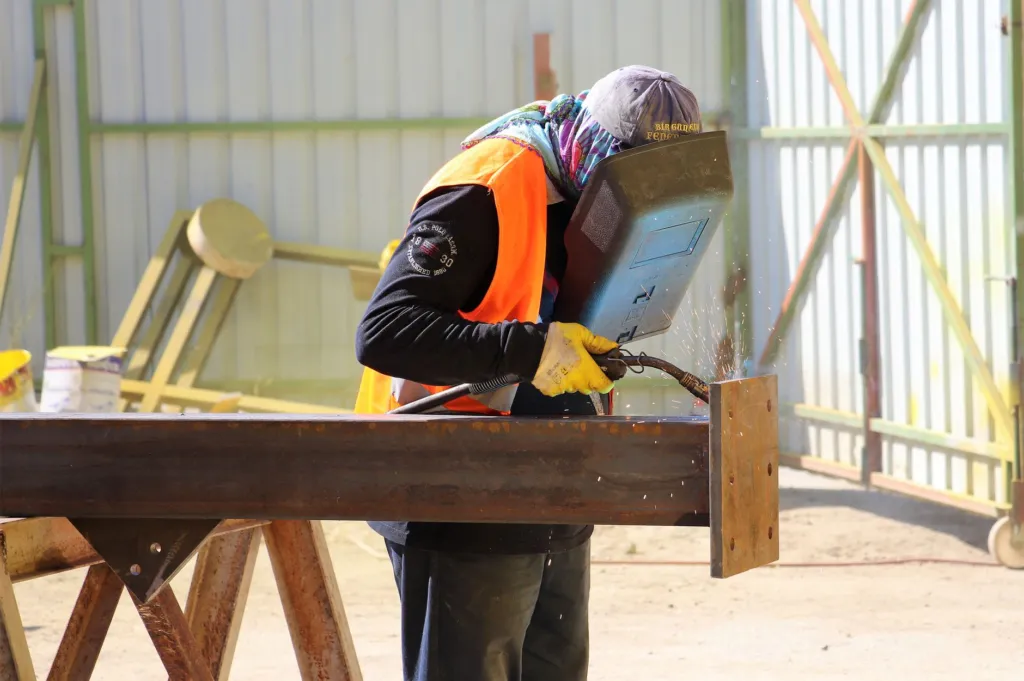
Construction covers a broad set of occupations, and a job title alone rarely tells you whether someone’s experience matches your site. Depending on the project, the brief might include carpentry, electrical work, plumbing, welding, bricklaying, civil engineering or project management. Separate core duties from preferred experience, then describe the tasks, tools, materials and work setting involved.
For a trade role, spell out the work a person will perform: for example, installation, fabrication, maintenance, formwork or finishing. Note the equipment used, the level of independence expected, the drawings or specifications they must interpret, and how work is inspected. For technical and supervisory roles, clarify responsibilities for planning, coordination, reporting, quality or leading crews. This detail gives recruiters a stronger basis for finding relevant applicants and helps hiring managers assess evidence consistently.
Be careful not to treat a similar-sounding qualification or overseas job title as proof of equivalence. Ask candidates to provide a clear employment history, examples of comparable tasks and relevant certificates or licences. Where a role requires a specific Australian registration, licence or other formal recognition, identify that requirement early and confirm the applicable process with the relevant authority. Requirements can differ by occupation, jurisdiction and task.
Consider the full crew mix, too. A project may need experienced tradespeople, but it also depends on supervisors, engineers, estimators, contract administrators and project managers to plan and coordinate delivery. GWS has discussed workforce planning for complex projects in its article on skills and major project needs in Western Australia. Use project-specific analysis rather than relying on older forecasts or assuming that conditions described in a past article still apply.
Write a brief that makes experience verifiable

A useful recruitment brief translates a project requirement into evidence an applicant can provide. Start with the work location, project stage, employment arrangement, reporting line and expected duties. Add the practical context: site conditions, roster expectations, physical requirements that are genuinely necessary, safety-critical tasks and the standards or documentation the worker will use. Avoid vague descriptions such as “must be flexible” unless you can explain what that means on the job.
For each essential capability, decide how you will verify it. You could ask for a detailed account of a comparable task, request examples of completed work, check references, review training records or arrange a practical assessment where suitable. Ask consistent questions of all candidates applying for the same role. A structured scorecard can help hiring managers compare evidence rather than relying on confidence, familiarity or an untested impression.
Check the quality and context of documents, not just whether a document has been supplied. Confirm employment dates and responsibilities with referees, and look for gaps or differences that need explanation. If a credential uses unfamiliar terminology, seek a reliable interpretation instead of guessing. For regulated work, make clear that suitability for the job and any required recognition are separate checks; do not promise that a particular qualification will be accepted.
Share a realistic account of the work during recruitment. Explain the project environment, team structure, supervision arrangements, safety expectations and likely challenges. Clear information helps applicants decide whether the role fits their experience and circumstances, while reducing the risk of a mismatch between the hiring conversation and the job they encounter. It also gives the site team an agreed basis for induction and early performance discussions.
“The strongest hiring brief describes the work that must be done—and the evidence that will prove a candidate can do it.”Key insight · Global Workforce Solutions
Plan compliance before making commitments

International recruitment involves checks beyond trade capability. Employers should confirm the current rules and requirements that apply to the intended role and hiring arrangement before making commitments to a candidate. Visa eligibility, sponsorship, occupation settings and work conditions can change, and the right answer depends on individual and employer circumstances. Do not rely on an old occupation list, informal advice or an assumption that a job title automatically fits a visa pathway.
Use the Australian Department of Home Affairs for current visa and migration information, and seek qualified immigration advice where the circumstances call for it. GWS’s 2024 Australian visa occupations page is historical information, not a current eligibility check. It may help explain why occupation terminology matters, but employers should verify present requirements through official channels before relying on any list or pathway.
Employment arrangements also need careful review. Set out pay, hours, leave, accommodation or travel arrangements where applicable, and who is responsible for each part of mobilisation. Check the applicable workplace obligations with the Fair Work Ombudsman, and obtain advice for questions that require an assessment of your particular arrangement. Recruitment and migration processes do not replace the employer’s responsibility to understand workplace requirements.
Build document and decision checks into the schedule rather than leaving them until a person is due on site. Identify who will verify identity, references, qualifications, licences, work rights and any project-specific clearances. Assign an owner to each check, keep an accurate record of decisions and allow for the possibility that further evidence or review may be needed. Avoid giving a start date or making a promise until the relevant conditions have been confirmed.
Prepare the site and team for mobilisation
A successful hire depends on more than the recruitment decision. Before mobilisation, plan how the worker will travel to the site, receive instructions, complete induction and access the tools, equipment and personal protective equipment required for the role. Confirm practical details such as accommodation and transport where the project arrangement makes them relevant. Make sure the candidate understands the work location, reporting contact and first-day plan.
Construction safety information should be clear, job-specific and understood. Explain site rules, emergency arrangements, hazard reporting, stop-work expectations and how to raise a concern. Check comprehension rather than relying only on a signed form. Use demonstrations, translated or visual material where appropriate, and give workers an opportunity to ask questions. The aim is to make the required safe way of working understandable and usable for everyone on the crew.
Plan a named supervisor or mentor for the early period and agree how performance and wellbeing will be discussed. Early check-ins can surface practical problems—such as unclear instructions, missing equipment or unfamiliar site processes—before they become larger disruptions. Supervisors should know what support is available and how to escalate an issue. This is not a substitute for proper induction; it is a way to help new team members settle into the actual work environment.
Make integration part of the crew plan. Explain responsibilities across trades, agree communication routines for shift handovers and coordination, and set expectations for respectful behaviour. Invite feedback from the new worker as well as the site team. Where a worker needs clarification, create a straightforward way to ask without delaying safety-critical decisions. A thoughtful onboarding process supports productivity and helps the employer understand whether recruitment assumptions matched conditions on site.
Review results and refine the hiring plan
Once recruitment is under way, review what the process is showing. Are applicants producing the evidence the brief requires? Are particular tasks, qualifications or site conditions proving difficult to match? If not, reconsider whether the specification is too broad, too narrow or unclear. The aim is not to lower an essential standard, but to distinguish genuine requirements from preferences that could unnecessarily exclude capable candidates.
Track practical measures that help the project team make decisions, such as the number of candidates who meet the defined criteria, the checks still outstanding, and whether roles are being filled in time for the relevant work stage. Use your own recruitment records and project schedule; avoid relying on unsupported industry averages. If the project plan changes, update the role brief and communicate the change to candidates and relevant managers.
After workers start, compare planned duties with the work actually assigned. Ask supervisors whether skills are being used appropriately, whether further training or equipment is needed and whether the induction addressed site-specific risks. Follow up on worker feedback and resolve issues through the appropriate internal channels. This feedback loop can improve future recruitment briefs, mobilisation plans and supervisor preparation.
For Australian employers, the practical next step is to define the roles, location, project timing and evidence required for each vacancy. Then share that workforce brief with Global Workforce Solutions to discuss the recruitment need, candidate assessment and planning considerations for your project.