
Aris Ignacio Teaches Students to Use Technology Responsibly
Dr Aris Ignacio’s work links specialist technology education with responsible use and a stronger voice for young internet users. Australian employers can take lessons from that approach when planning future skills.
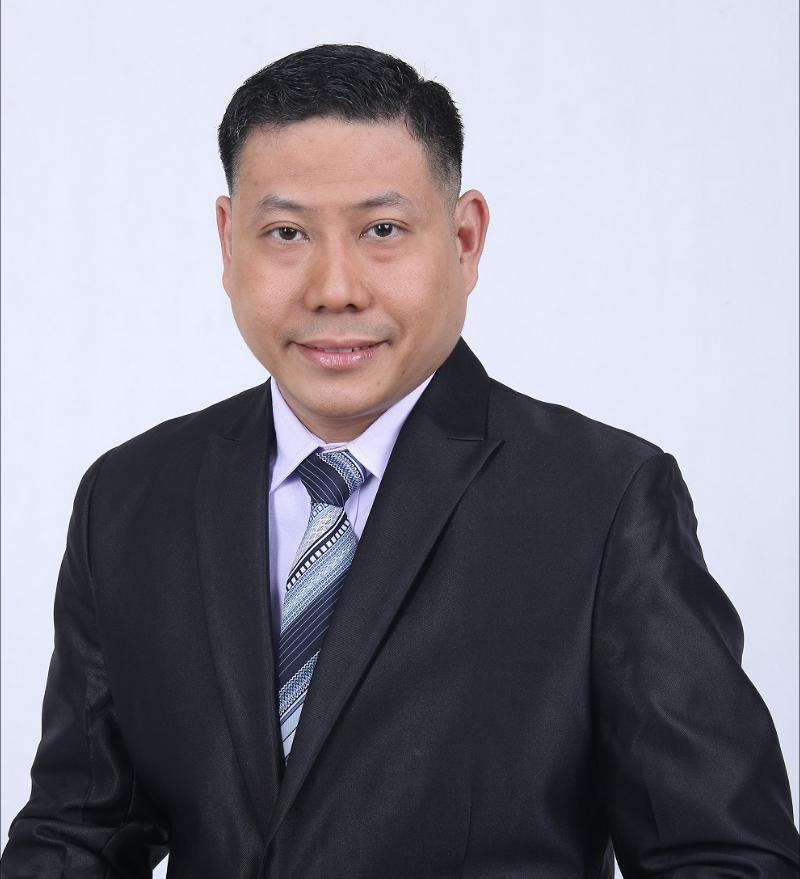
Dr Aris Ignacio is teaching students to combine technical capability with responsible technology use. As dean of the College of Information Technology and Engineering at Southville International School affiliated with Foreign Universities, he leads education in fields including artificial intelligence, cybersecurity and data science, while also representing internet users across the Asia-Pacific region.
Source: Aris Ignacio Is Teaching Students to Use Technology Responsibly
An early bet on AI
Southville’s move into artificial intelligence began before generative AI became a familiar part of everyday discussion. In 2018, the college added an AI specialisation to its information technology degree in partnership with Acer, according to Newsbytes.PH. Two months later, Southville held what it described as its first International Forum on Real-Life Applications for Artificial Intelligence Technology. Ignacio was among the speakers.
“Technical capability matters most when it is paired with sound judgement.”
The early programme was framed around how graduates might contribute in workplaces, not only around academic knowledge. Ignacio said the degree would give students the confidence and know-how to help organisations become more innovative, efficient and sustainable. The underlying idea remains relevant to employers: technical education is most useful when it prepares people to apply what they learn to real organisational needs.
By 2025, the college had three specialist tracks: Artificial Intelligence and Machine Learning, Information and Cybersecurity, and Data Science and Business Analytics. Southville’s account also named Oracle, AWS, Acer and Huawei among its industry partners. The breadth of these tracks reflects the range of expertise employers may need to bring together, from building and applying AI systems to protecting information and interpreting data.
In a June 2025 statement, Ignacio described the ambition as developing “well-rounded, tech-smart leaders who understand their role in shaping the digital world.” He also emphasised that students should carry strong values into their future work. For employers, this is a useful prompt when reviewing education partnerships: ask not only which tools students learn, but how their programmes prepare them to make considered decisions about using those tools. GWS has also outlined ways employers can work with education and training providers to align learning with workforce needs.
Engineering for an automated industry
Ignacio’s work also extends beyond information technology. In November 2024, Southville announced a new Bachelor of Science in Industrial Engineering programme within his college. The announcement connected industrial engineering with the college’s existing computer engineering programme and the practical technologies changing industry.
Ignacio described the programmes as giving students knowledge of automation, robotics and artificial intelligence that responds to the demands of high-tech industry. Those areas have implications across operations: employers may need people who can understand how systems fit together, work with technical specialists and consider how a process should function in practice. A degree title alone will not tell a hiring team whether a graduate can do all of that, so employers can benefit from discussing projects, applied learning and the kinds of problems students are asked to solve.
There is an example of applied work in a June 2025 Southville report. A team of students and faculty from the college was developing a driver-assistance system designed to warn of collisions and recognise traffic signs using dashcam footage. The project illustrates how learning can bring together software, data and an applied engineering problem. It is an example from the college, not a claim that every student has worked on the same kind of system.
For workforce planners, the practical lesson is to describe capability in terms of tasks and outcomes, rather than relying only on broad labels such as “AI skills” or “automation experience”. A project brief can help educators understand whether an employer is interested in data preparation, system testing, cybersecurity awareness, engineering design or another specific capability. This kind of dialogue can also help businesses consider whether existing staff need development alongside future recruitment. GWS has discussed approaches to addressing workforce gaps, including training and collaboration with educational institutions.
A voice for young internet users
Alongside his academic role, Ignacio has worked to bring young people into discussions about internet governance. Southville hosts IN2ITION, the Philippine Youth Internet Governance Forum. The fourth edition took place at the college in May 2025, giving young participants a setting to engage with questions about the internet and its future.
After the forum, Ignacio said that seeing young people take responsibility for shaping the internet’s future reinforced his belief in education’s ability to support communities. His approach treats participation as part of learning: students can build understanding not only by studying technology, but also by contributing to conversations about how it is governed and used.
That involvement has a longer history. In 2019, Ignacio took students to the Asia Pacific Regional Internet Governance Forum in Vladivostok, where he spoke on a panel that included the ethical dimensions of artificial intelligence. He argued that collaboration among stakeholders, including young people, could help bring about major developments in the field. The point for employers is not that every graduate needs a policy role, but that technical work takes place within a wider community of users, organisations and decision-makers.
On 18 May 2026, ICANN’s At-Large staff announced that Ignacio had been chosen by acclamation as chair of APRALO, the Asian, Australasian and Pacific Islands Regional At-Large Organization. APRALO represents internet users across the region within ICANN, the organisation that coordinates the internet’s domain names. Ignacio’s term runs until 2028. His appointment links his local education work with a regional forum where user perspectives can be represented in internet policy discussions.
The BPOAI.ai technology industry directory provides a related view of technology and outsourcing coverage. For employers, the connection is a reminder that the digital skills pipeline involves more than preparing people to operate tools: it also involves developing people who can understand the interests and responsibilities surrounding those tools.
This article draws on the original BPOAI.ai report, Aris Ignacio Is Teaching Students to Use Technology Responsibly.
“It is our duty to open the eyes of this generation to teach them to use technology responsibly and for the good of all.”Dr. Aris Ignacio · Dean, College of Information Technology and Engineering, Southville International School and Colleges
Responsible use, not just skills
Responsible use is central to Ignacio’s message to students. In June 2025, he described it as an educational duty: “It is our duty to open the eyes of this generation to teach them to use technology responsibly and for the good of all.” The statement gives a clear context for the college’s technical programmes: skill acquisition matters, but so does the judgement students bring to applying their knowledge.
For employers, that distinction matters when assessing future skills. A person may know how to work with data or an AI tool, yet still need to understand how to check outputs, handle information appropriately, recognise limitations and consider who may be affected by a decision. The source account does not set out a formal curriculum for these responsibilities, so employers should ask education partners how they are addressed rather than assume one approach is universal.
Employers can make those conversations more useful by describing the decisions that arise in their own settings. For example, a project team can explain where staff need to verify information, protect sensitive material or escalate a concern. Educators can then respond to concrete workplace contexts when discussing learning needs. This is a practical way to connect responsible use with the tasks a graduate may encounter, without treating technical competence and ethical awareness as separate subjects.
Ignacio’s work also suggests that responsible technology education includes listening to people who use the internet, particularly those whose perspectives may not otherwise be prominent. In a workplace, the same principle can inform how teams consider customer needs, worker experience and the impact of technology-enabled processes. It does not replace appropriate organisational policies or specialist advice; it helps make the human consequences of a technical decision part of the conversation.
Where Aris Ignacio’s work is going
Ignacio’s regional and academic responsibilities now run alongside one another: he continues to lead Southville’s College of Information Technology and Engineering while serving as APRALO chair through 2028. Both roles connect technology education with questions about internet users, policy and participation. His description of the chair’s role also emphasised cooperation. In a May 2026 message on the APAC-Discuss mailing list, he said, “I also believe that whatever we achieve as APRALO is always a shared effort.”
In his statement accepting the nomination, Ignacio set out an intention to make a practical contribution, keep APRALO represented in policy discussions, strengthen cooperation across the region and with other regional organisations, and create more room for emerging voices, especially young people and newer members. That emphasis on collaboration and participation follows the same thread as his education work: capability develops within communities, not in isolation.
For Australian employers, the useful takeaway is to engage with the people and institutions preparing future technology workers. Start with the roles your organisation expects to need, then share the tasks and capabilities involved with relevant education partners. Ask how students gain applied experience, how responsible use is discussed, and whether a conversation with your own technical or project teams could clarify emerging needs.
These discussions can complement other workforce planning measures, including development for existing employees and closer alignment between training and business requirements. GWS has shared further ways to build a stronger talent pipeline. The practical next step is to write down the skills, project context and responsible-use expectations relevant to your hiring need, then discuss that workforce brief with Global Workforce Solutions.